2008年5月6日 星期二

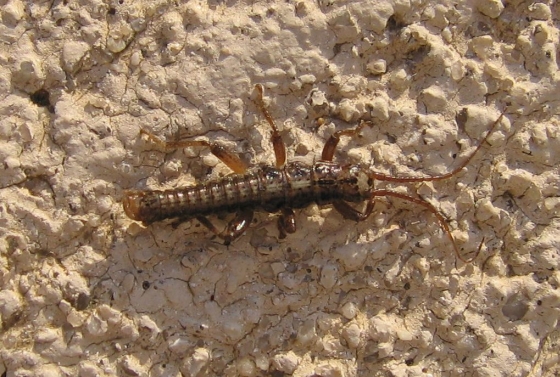
[Article: Crypsis]Adaptive evolution of Timema according to hostplants


Adaptive evolution of cryptic coloration: the shape of host plants and dorsal stripes in Timema walking-sticks

  • 1Marine Science Institute, University of California, Santa Barbara, CA 93106, USA
    2Behavioural Ecology Research Group, Department of Biosciences, Simon Fraser University, Burnaby, B. C. V5A 1S6, Canada

Abstract

The adaptive significance of cryptic colour patterns has seldom been analysed in a phylogenetic context. We mapped data on the presence vs. absence of dorsal stripes, and the use of needle-like vs. broad foliage, onto a recent phylogeny of Timema walking-sticks, in order to infer the evolutionary history of these traits and test the hypothesis that the dorsal stripe is an adaptation for crypsis on needle-like leaves. By maximum parsimony optimization, the dorsal stripe has evolved five or six times in this clade, each time in association with the use of vegetation with needle-like leaves. Maddison's concentrated changes test showed that this association between morphology and habitat was statistically significant. By contrast, results based on Pagel's maximum likelihood analyses did not reach significance, probably because the large number of origins of dorsal stripe introduces statistical uncertainty. These results suggest that the adaptations for crypsis can arise readily and in parallel, in the appropriate selective environment. However, they may also constrain the evolution of host-plant use, as there is no unambiguous case of Timema species with dorsal stripes shifting to broad-leaved plants. © 2008 The Linnean Society of London, Biological Journal of the Linnean Society, 2008, 94, 1–5.

See another paper published by Sandoval

2008年4月30日 星期三

[Article: Floral mimicry]Chemical mimicry as a preadaptation


Evolution of sexual mimicry in the orchid subtribe orchidinae: the role of preadaptations in the attraction of male bees as pollinators

Florian P Schiestl1 email and Salvatore Cozzolino2 email

1Institute of Systematic Botany, University of Zürich, Zollikerstrasse 107, CH-8008 Zürich, Switzerland

2Università degli Studi di Napoli "Federico II", Dipartimento delle Scienze Biologiche, Via Foria 223, 80139 Napoli, Italy

author email corresponding author email

BMC Evolutionary Biology 2008, 8:27doi:10.1186/1471-2148-8-27


Published: 28 January 2008

Abstract

Background

Within the astonishing diversity of orchid pollination systems, sexual deception is one of the most stunning. An example is the genus Ophrys, where plants attract male bees as pollinators by mimicking female mating signals. Unsaturated hydrocarbons (alkenes) are often the key signal for this chemical mimicry. Here we investigate the evolution of these key compounds within Orchidinae by mapping their production in flowers of selected species onto their estimated phylogeny.

Results

We found that alkenes, at least in trace amounts, were present in 18 of 20 investigated species together representing 10 genera. Thus, the reconstruction of ancestral state for alkene-production showed that this is a primitive character state in Ophrys, and can be interpreted as a preadaptation for the evolution of sexual deception. Four of the investigated species, namely Ophrys sphegodes, Serapias lingua, S. cordigera, and Anacamptis papilionacea, that are pollinated primarily by male bees, produced significantly larger amounts and a greater number of different alkenes than the species pollinated either primarily by female bees or other insects.

Conclusion

We suggest that high amounts of alkenes evolved for the attraction of primarily male bees as pollinators by sensory exploitation, and discuss possible driving forces for the evolution of pollination by male bees.

[Article]Conflict btw natural & sexual selection due to mmicry


Interspecific sexual attraction because of convergence in warning colouration: is there a conflict between natural and sexual selection in mimetic species?

Journal of Evolutionary Biology

Volume 21 Issue 3 Page 749-760, May 2008

Citation: C. ESTRADA, C. D. JIGGINS (2008) Interspecific sexual attraction because of convergence in warning colouration: is there a conflict between natural and sexual selection in mimetic species? Journal of Evolutionary Biology 21 (3) , 749–760 doi:10.1111/j.1420-9101.2008.01517.x

Abstract

When species converge in their colour patterns because of mimicry, and those patterns are also used in mate recognition, there is a probability of conflicting selection pressures. Closely related species that mimic one another are particularly likely to face such confusion because of similarities in their courtship behaviour and ecology. We conducted experiments in greenhouse conditions to study interspecific attraction between two mimetic butterfly species, Heliconius erato and Heliconius melpomene. Both species spent considerable time approaching and courting females of the co-mimic species. Experiments using wing models demonstrated the importance of colour pattern in this interspecific attraction. Although males of H. melpomene were attracted to their co-mimics as much as to their own females, H. erato males were more efficient at distinguishing conspecifics, possibly using wing odours. Although preliminary, these results suggest that the use of additional cues may have evolved in H. erato to reduce the cost of convergence in visual signals with H. melpomene. Overall, our results showed that there might be a cost of mimetic convergence because of a reduction in the efficiency of species recognition. Such cost may contribute to explain the apparently stable diversity in Müllerian mimetic patterns in many tropical butterfly assemblages.

2008年3月26日 星期三

[Article: Predation]Predators Make (Temporary) Escape from Coevolutionary Arms Race


Predators Make (Temporary) Escape from Coevolutionary Arms Race

Liza Gross

Citation: Gross L (2008) Predators Make (Temporary) Escape from Coevolutionary Arms Race. PLoS Biol 6(3): e75 doi:10.1371/journal.pbio.0060075

Published: March 11, 2008


Arguably cute and spanning at most 20 cm from head to tail, the rough-skinned newt packs pretty near the most poisonous punch known to the animal kingdom. Taricha granulosa, like all species in its genus, exudes an exceptionally potent neurotoxin, tetrodotoxin (TTX) from its skin glands. Some Taricha newts could wipe out thousands of mice or a clutch of humans with their toxic issue. But why produce enough poison to kill a potential predator several times over? To discourage the one predator—the common garter snake (Thamnophis sirtalis)—that's resistant enough to the poison to count on newts as a food source.

URL: http://biology.plosjournals.org/perlserv/?request=get-document&doi=10.1371/journal.pbio.0060075

Phenotypic Mismatches Reveal Escape from Arms-Race Coevolution

Charles T. Hanifin1¤*, Edmund D. Brodie Jr.1, Edmund D. Brodie III2

1 Department of Biology, Utah State University, Logan, Utah, United States of America, 2 Department of Biology, University of Virginia, Charlottesville, Virginia, United States of America

Because coevolution takes place across a broad scale of time and space, it is virtually impossible to understand its dynamics and trajectories by studying a single pair of interacting populations at one time. Comparing populations across a range of an interaction, especially for long-lived species, can provide insight into these features of coevolution by sampling across a diverse set of conditions and histories. We used measures of prey traits (tetrodotoxin toxicity in newts) and predator traits (tetrodotoxin resistance of snakes) to assess the degree of phenotypic mismatch across the range of their coevolutionary interaction. Geographic patterns of phenotypic exaggeration were similar in prey and predators, with most phenotypically elevated localities occurring along the central Oregon coast and central California. Contrary to expectations, however, these areas of elevated traits did not coincide with the most intense coevolutionary selection. Measures of functional trait mismatch revealed that over one-third of sampled localities were so mismatched that reciprocal selection could not occur given current trait distributions. Estimates of current locality-specific interaction selection gradients confirmed this interpretation. In every case of mismatch, predators were “ahead” of prey in the arms race; the converse escape of prey was never observed. The emergent pattern suggests a dynamic in which interacting species experience reciprocal selection that drives arms-race escalation of both prey and predator phenotypes at a subset of localities across the interaction. This coadaptation proceeds until the evolution of extreme phenotypes by predators, through genes of large effect, allows snakes to, at least temporarily, escape the arms race.

URL: http://biology.plosjournals.org/perlserv/?request=get-document&doi=10.1371/journal.pbio.0060060

2008年3月25日 星期二

[Team]Jim Mallet (University College London)


Research themes

Primarily directed towards answering a basic, but still poorly understood riddle: how do new species arise? His group focuses on evolution and ecology of butterflies and moths (Lepidoptera), particularly near the species boundary. The Lepidoptera form 15-20% of the world's described species, yet are poorly known genetically.

(1) Hybridization and evolution in Heliconius butterflies
(2) Taxonomy, mimicry and biogeography in the Ithomiinae

Although his primary interests are in genetic and systematic studies of populations, geographic forms, and speciation, many of his results have obvious implications for conservation of endangered taxa. He remains committed to and interested in topics such as insecticide resistance, safety concerns about the release of genetically modified organisms (GMOs), and in the biodiversity and conservation applications of his work.

URL: http://www.ucl.ac.uk/taxome/jim/

[Article]Juvenile Hormone Regulates Butterfly Larval Pattern Switches


Abstract:

Juvenile Hormone Regulates Butterfly Larval PatternSwitches

Ryo Futahashi1,2 and Haruhiko Fujiwara1*

Insect color patterns can be very diverse. This variation is also seen among many larval instar stages, which can take on vastly different phenotypes. Young caterpillars of the swallowtail butterfly, Papilio xuthus, are mimics of bird droppings, whereas the fifth larval instar is camouflaged among the leaves of host plants (cryptic pattern). We find that juvenile hormone (JH) titers decrease during the fourth larval instar. Furthermore, treatment with JH analog at the beginning of the fourth instar stage resulted in reproducing the mimetic pattern instead of the usual cryptic one and likewise altered gene expression patterns to that associated with the mimetic pattern. These findings suggest that JH regulates the progressive larval pattern switch of this insect.

1 Department of Integrated Biosciences, Graduate School of Frontier Sciences, University of Tokyo, Bioscience Building 501, Kashiwa, Chiba 277-8562, Japan.
2 National Institute of Agrobiological Sciences, 1-2 Owashi, Tsukuba, Ibaraki 305-8634, Japan.

* To whom correspondence should be addressed. E-mail: haruh@k.u-tokyo.ac.jp
URL: http://www.sciencemag.org/cgi/content/full/319/5866/1061?rss=1

2008年3月16日 星期日

[Video]Butterfly wings under UV

http://youtube.com/watch?v=7rkWeyUURts