顯示具有 Classical case study: Papilio 標籤的文章。 顯示所有文章

2012年3月21日 星期三

為什麼警戒性物種常會聚集過夜?


[image]
Pegram KV, Han HA, Rutowski RL. 2012. Overnight perching aggregations of the aposematic Pipevine Swallowtail (Battus philenor: Lepidoptera: Papilionidae): implications for predation risk and warning signal use. The Journal of Research on the Lepidoptera. 45: 9-16.[Online information has not been updated]

警戒色除了能加速捕食者的迴避學習之外,也會提高自身被捕食者發現的機率,所以具警戒色的物種,演化出利用相互聚集的方式入夜,以分散捕食風險。在此Pegram等人則認為除了以個體數分散捕食風險之外,聚集可能也會改變翅紋訊號而影響捕食者行為,因此,以Pipevine Swallowtail進行觀察,於野外及圈地內探討個體及群體入夜的棲息行為,記錄蟲體姓別、日出日落時間、環境狀況及日落前1.5小時至日落後半小時內蟲體的狀態及行為進行分析,發現雖然Pipevine Swallowtail以聚集過夜為主,但仍有部份個體選擇獨處,並且 (a)在聚落中的性別比是沒差異的 (b)個體在環境中對於棲息位置是有所選擇的:選擇低光照條件或高處以勸阻捕食者攻擊行為 (c)聚集時可能因為相互擾亂降低警戒信號的強度 (d)停棲角度可能使影響警戒信號的呈現:增加警戒的面向、改變信號折射角度降低顯眼性 (e)停棲角度改變,於日出時可增加能量吸收的表面積 (f)日出後個體將離開過夜棲地,正好避開捕食者主要的活動時間,因此,可能基於這些理由,入夜後的群聚休息才被留存下來。

2009年9月21日 星期一

非洲白鳳蝶的系統發生學與擬態翅紋的演化

文獻出處:Clark, R. & Vogler, A. P. (2009) A phylogenetic framwork for wing pattern evolutio in the mimetic Mocker Swallowtail Papilio dardanus. Molecular Ecology 18: 3872-3884.

簡介
非洲白鳳蝶(Papilio dardanus)被認為是貝氏擬態(Batesian mimicry)中的擬態者(mimic),其雌雄二態性與雌性其中一型擬態大樺斑蝶(Danaus plexippus) 的表型長久以來被視為擬態生物學中的經典例子之一。本篇文章嘗試利用分子資料重建非洲白鳳蝶不同亞種間與不同區域間的親緣關係,嘗試找出其擬態斑紋的演化 時順。該研究使用兩個粒線體基因與數個與擬態斑紋有關或無關的核基因,重建不同亞種間的親緣關係。結果顯示粒線體基因在不同區域間呈現地理上的結構,並且 有較少的多樣性;而核基因間則無地理上的結構,並且基因序列間有多樣性的情形。定年的結果顯示,非洲白鳳蝶的種化約發生於2.9百萬年前,而擬態斑紋族群 的產生則在0.55-0.94百萬年前,擬態斑紋的產生在非洲白鳳蝶的原名亞種(P. d. dardanus)中是較早出現的,但仍晚於雌雄二態性。

Abstract
The Batesian mimetic swallowtail butterfly Papilio dardanus exhibits numerous distinct wing colour morphs whose evolutionary origins require large phenotypic shifts. A phylogenetic framework to study the history of these morphs was established by DNA sequencing of representative subspecies from sub-Saharan Africa and Indian Ocean islands. Two mitochondrial genes and the nuclear internal transcribed spacer marker revealed deeply separated eastern and western African mainland lineages, plus one lineage each on Madagascar and Grande Comore. These markers showed very little polymorphism within lineages. In contrast, markers genetically linked to the mimicry locus H, including the transcription factor invected and two adjacent amplified fragment length polymorphisms-derived sequences, showed high nucleotide diversity but were not geographically structured. Variation in the unlinked wingless gene showed a similar pattern, rejecting the hypothesis that high level of variation in the H region is due to balancing selection exerted by the phenotypes. The separation from a common ancestor with Papilio phorcas estimated at 2.9 Ma coincides with the origin of a mimicry model, Danaus chrysippus. However, the model reached Africa only at the time of the internal splits of P. dardanus mtDNA groups, here estimated at 0.55-0.94 Ma. The nuclear genome shows less geographic structure and may not track recent population differentiation, suggesting that widespread mimicry morphs have arisen early in the evolution of the P. dardanus lineage, although after the male-female dimorphism which is ancestral. The current wide distribution of P. dardanus and population subdivision evident from mtDNA may have been achieved only with the spread of the models across Africa.

2008年8月5日 星期二

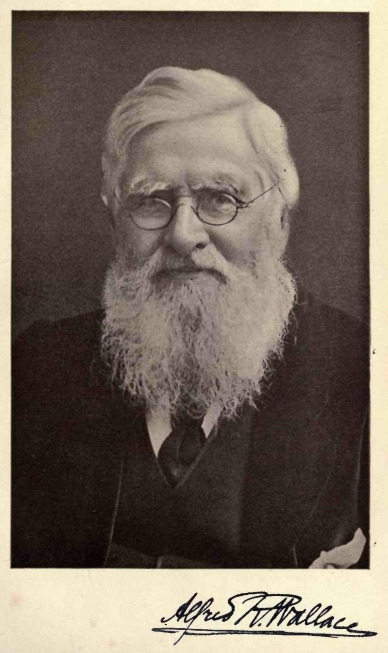
[Article]Mimetic butterflies support Wallace's model of sexual dimorphism


Mimetic butterflies support Wallace's model of sexual dimorphism
Proc Biol Sci. 2008 Jul 22;275(1643):1617-24.
Krushnamegh Kunte


Section of Integrative Biology, University of Texas at Austin, 1 University Station C 0930, Austin, TX 78712-0253, USA Theoretical and empirical observations generally support Darwin's view that sexual dimorphism evolves due to sexual selection on, and deviation in, exaggerated male traits. Wallace presented a radical alternative, which is largely untested, that sexual dimorphism results from naturally selected deviation in protective female coloration. This leads to the prediction that deviation in female rather than male phenotype causes sexual dimorphism. Here I test Wallace's model of sexual dimorphism by tracing the evolutionary history of Batesian mimicry—an example of naturally selected protective coloration—on a molecular phylogeny of Papilio butterflies. I show that sexual dimorphism in Papilio is significantly correlated with both female-limited Batesian mimicry, where females are mimetic and males are non-mimetic, and with the deviation of female wing colour patterns from the ancestral patterns conserved in males. Thus, Wallace's model largely explains sexual dimorphism in Papilio. This finding, along with indirect support from recent studies on birds and lizards, suggests that Wallace's model may be more widely useful in explaining sexual dimorphism. These results also highlight the contribution of naturally selected female traits in driving phenotypic divergence between species, instead of merely facilitating the divergence in male sexual traits as described by Darwin's model.
Keywords

Batesian mimicry, polymorphism, female-limited mimicry, directional selection, stabilizing sexual selection, convergence