顯示具有 Batesian mimicry 標籤的文章。 顯示所有文章

2009年12月16日 星期三

在貝氏擬態中,高豐度的model可能允許mimic性狀在演化過程中漸變


文獻來源:Kikuchi DW & Pfennig DW. 2009. High-model abundance may permit the gradual evolution of Batesian mimicry: an experimental test. Proc. R. Soc. B. in press. [page]

簡介
貝氏擬態中mimic的演化被認為是追尋著model而變化其擬態斑紋組,然而在演變的過程中,斑紋的變化是突然間的劇烈變化,並且快速的達到性狀固定(phenotype fixed),或是逐漸變化淘汰不被環境所偏好的性狀,l這個問題在各派學說中並未達到共識。本篇研究以珊瑚蛇擬態群為例,透過捕食實驗與性狀在演化關係樹上的分佈,推測mimic性狀的演化方向。從捕食實驗的結果來看,接近擬態的mimic與不顯眼的斑紋在model豐度高的時候並不容易遭受攻擊,反之在model豐度低的時候則以上兩者皆遭受高度攻擊。性狀演化的結果則顯示,mimic的斑紋演化趨勢是從隱蔽的顏色到半擬態型,再到擬態型。這篇文章提供了mimic斑紋組的演化在model豐度高的條件下,可以經由逐漸的變化漸進參與擬態群。

2009年10月8日 星期四

警戒性與貝氏擬態是否一定需要醒目顏色配合? 研究顯示歐洲蝮蛇的隱匿但具辯識性的斑紋可避免掠食者的攻擊

文獻來源: WüSTER W, ALLUM CSE, BIRTA BJARGARDOTTIR I, BAILEY KL, DAWSON KJ, GUENIOUI J, LEWIS J, MCGURK J, MOORE AG, NISKANEN M, POLLARD CP. 2004. Do aposematism and Batesian mimicry require bright colours? A test, using European viper markings. Proceedings of the Royal Society of London. Biological sciences 271(1556): 2495-2499. [全文下載]

Abstract
Predator avoidance of noxious prey, aposematism and defensive mimicry are normally associated with bright, contrasting patterns and colours. However, noxious prey may be unable to evolve conspicuous coloration because of other selective constraints, such as the need to be inconspicuous to their own prey or to specialist predators. Many venomous snakes, particularly most vipers, display patterns that are apparently cryptic, but nevertheless highly characteristic, and appear to be mimicked by other, non-venomous snakes. However, predator avoidance of viper patterns has never been demonstrated experimentally. Here, the analysis of 813 avian attacks on 12 636 Plasticine snake models in the field shows that models bearing the characteristic zigzag band of the adder (Vipera berus) are attacked significantly less frequently than plain models. This suggests that predator avoidance of inconspicuously but characteristically patterned noxious prey is possible. Our findings emphasize the importance of mimicry in the ecological and morphological diversification of advanced snakes.

圖片連結: wikipedia (photo credit: Marek Szczepanek)

2009年9月21日 星期一

透明小魚蝦的群聚可能是一種閃避視覺系捕食者的防禦策略, 並牽涉數量擬態(或稱社會擬態)

文獻來源: Carvalho LN, Zuanon J, Sazima I. 2009. The almost invisible league: crypsis and association between minute fishes and shrimps as a possible defence against visually hunting predators. Neotropical Ichthyology 4(2): doi: 10.1590/S1679-62252006000200008

Abstract
Camouflage is one of the most widespread defence modes used by substrate-dwelling animals, whereas transparency is generally found in open-water organisms. Both these defence types are regarded as effective against visually guided predators. We present here three assemblages of similarly-sized freshwater fish and shrimp species which apparently rely on camouflage and transparency to evade some of their potential predators. In one of the associations, there is a transition from cryptic colours and translucency to transparency of the component species according to the position each of them occupies in the habitat. The likeness between the fishes and the shrimps is here regarded as a type of protective association similar to numerical or social mimicry. Additionally, we suggest that the assemblage may contain Batesian-like mimicry components.

圖片連結: Aquaristik ohne Geheimnisse

非洲白鳳蝶的系統發生學與擬態翅紋的演化

文獻出處:Clark, R. & Vogler, A. P. (2009) A phylogenetic framwork for wing pattern evolutio in the mimetic Mocker Swallowtail Papilio dardanus. Molecular Ecology 18: 3872-3884.

簡介
非洲白鳳蝶(Papilio dardanus)被認為是貝氏擬態(Batesian mimicry)中的擬態者(mimic),其雌雄二態性與雌性其中一型擬態大樺斑蝶(Danaus plexippus) 的表型長久以來被視為擬態生物學中的經典例子之一。本篇文章嘗試利用分子資料重建非洲白鳳蝶不同亞種間與不同區域間的親緣關係,嘗試找出其擬態斑紋的演化 時順。該研究使用兩個粒線體基因與數個與擬態斑紋有關或無關的核基因,重建不同亞種間的親緣關係。結果顯示粒線體基因在不同區域間呈現地理上的結構,並且 有較少的多樣性;而核基因間則無地理上的結構,並且基因序列間有多樣性的情形。定年的結果顯示,非洲白鳳蝶的種化約發生於2.9百萬年前,而擬態斑紋族群 的產生則在0.55-0.94百萬年前,擬態斑紋的產生在非洲白鳳蝶的原名亞種(P. d. dardanus)中是較早出現的,但仍晚於雌雄二態性。

Abstract
The Batesian mimetic swallowtail butterfly Papilio dardanus exhibits numerous distinct wing colour morphs whose evolutionary origins require large phenotypic shifts. A phylogenetic framework to study the history of these morphs was established by DNA sequencing of representative subspecies from sub-Saharan Africa and Indian Ocean islands. Two mitochondrial genes and the nuclear internal transcribed spacer marker revealed deeply separated eastern and western African mainland lineages, plus one lineage each on Madagascar and Grande Comore. These markers showed very little polymorphism within lineages. In contrast, markers genetically linked to the mimicry locus H, including the transcription factor invected and two adjacent amplified fragment length polymorphisms-derived sequences, showed high nucleotide diversity but were not geographically structured. Variation in the unlinked wingless gene showed a similar pattern, rejecting the hypothesis that high level of variation in the H region is due to balancing selection exerted by the phenotypes. The separation from a common ancestor with Papilio phorcas estimated at 2.9 Ma coincides with the origin of a mimicry model, Danaus chrysippus. However, the model reached Africa only at the time of the internal splits of P. dardanus mtDNA groups, here estimated at 0.55-0.94 Ma. The nuclear genome shows less geographic structure and may not track recent population differentiation, suggesting that widespread mimicry morphs have arisen early in the evolution of the P. dardanus lineage, although after the male-female dimorphism which is ancestral. The current wide distribution of P. dardanus and population subdivision evident from mtDNA may have been achieved only with the spread of the models across Africa.

2009年2月23日 星期一

Butterfly effects in mimicry? Combining signal and taste can twist the relationship of Müllerian co-mimics

Butterfly effects in mimicry? Combining signal and taste can twist the relationship of Müllerian co-mimics

Behavioural Evology and Sociobiology, Vol. 62, No. 8, 1267-1276

Eira Ihalainen, Leena Lindström, Johanna Mappes and Sari Puolakkainen
Department of Biological and Environmental Science, FI-40014 University of Jyväskylä

Müllerian co-mimics are aposematic species that resemble each other; sharing a warning signal is thought to be mutually beneficial for the co-mimics by reducing per capita predation risk. In Batesian mimicry, edible mimics avoid predation by resembling an aposematic model species. The protection of both the model and the mimic is weakened when the mimics are abundant compared to the models. The quasi-Batesian view suggests that defended (Müllerian) co-mimics, when unequal in their defences, could also show a Batesian-like trend of increasing mortality with increasing abundance of a less defended “mimic”. We manipulated frequencies of unequally distasteful artificial co-mimics that were prey for great tits. The co-mimics had different signals (imperfect mimicry) but were equally preferred by the birds when palatable. Unexpectedly, when unpalatable, one of the signals was easier for the birds to learn to avoid. Consequently, during predator learning, the signal design of the prey strongly affected mortality of the co-mimics; there was an interaction between the signal and frequency treatments, but increasing the frequency of a less defended “mimic” did not increase co-mimic mortalities as predicted. In contrast, in a memory test that followed, the effect of signal design disappeared; if the birds had experienced high frequency of “mimics” during learning, co-mimic mortalities did subsequently increase. Since the effect of co-mimic frequencies on mortalities changed depending on the signal design of the prey and predator experience, the results suggest that mimetic relationship may be an unpredictable interplay of several factors in addition to taste and abundance.

Keywords: Aposematism - Quasi-Batesian mimicry - Predator psychology - Avoidance learning - Memory

2009年2月20日 星期五

Mimicry in coral reef fish: how accurate is this deception in terms of color and luminance?

Mimicry in coral reef fish: how accurate is this deception in terms of color and luminance?

Behavioral Ecology (2009)
Karen L. Cheney(a) and N. Justin Marshall(b)

(a) School of Integrative Biology (b) School of Biomedical Sciences, The University of Queensland,

Batesian and aggressive mimics are considered to be under selective pressure to resemble their models, whereas signal receivers are under selection to discriminate between mimics and models. However, the perceptual ability of signal receivers to discriminate between mimics and models is rarely studied. Here we examined 15 model–mimic coral reef fish pairs using nonsubjective methods to judge the accuracy of mimics in terms of color and luminance. We then investigated the potential ability of fish with various visual systems to discriminate between model and mimic colors using theoretical vision models. We found the majority of mimics closely resembled models in terms of color and luminance from a nonsubjective perspective. However, fish that have potentially trichromatic (3 distinct cone photoreceptors) visual systems with ultraviolet sensitivity had a much better capacity to discriminate between models and mimics compared with fish with midrange sensitivity or dichromatic (2 cone photoreceptors) fish. The spectral reflectance of color patches reflected by models and mimics became more similar with an increase in depth, indicating that signal receivers may be more likely to distinguish mimics from models in habitats located closer to the surface. There was no such change in luminance contrast with depth. The selection pressure on mimics to accurately resemble their model is therefore predicted to vary depending on the visual system of the signal receiver and the light environment.

Key words: aggressive mimicry, animal signaling, Batesian, color vision, signal accuracy.

2008年10月17日 星期五

[Article]Learning and the mimicry spectrum: from quasi-Bates to super-Müller

Alexandra C.V. BaloghCorresponding Author Contact Information, a, E-mail The Corresponding Author, Gabriella Gamberale-Stillea and Olof Leimara

aDepartment of Zoology, Stockholm University, Sweden

Müllerian mimicry is the mutualistic resemblance between two defended species, while Batesian mimicry is the parasitic resemblance between a palatable species (the mimic) and an unpalatable one (the model). These two kinds of mimicry are traditionally seen as extreme ends of a mimicry spectrum. For the range in between, it has been suggested that mimetic relations between unequally defended species could be parasitic, and this phenomenon has been referred to as quasi-Batesian mimicry. Where a mimetic relation is placed along the mimicry spectrum depends on the assumptions made about predator learning. We used a variant of the Rescorla–Wagner learning model for virtual predators to analyse the different possible components of the mimicry spectrum. Our model entails that the rate of associative learning is influenced by variation in the stimuli to be learned. Variable stimuli, that is, unequal defences, can increase the predator learning rate and thus lead to an increased level of mutualism in a mimetic relation. In our analysis, we made use of the concepts of super-Müllerian mimicry, where the benefit of mimicry is even greater than in traditional Müllerian mimicry, and quasi-Müllerian mimicry, where mimicry by a palatable mimic is mutualistic. We suggest that these types of mimicry should be included in the mimicry spectrum along with Müllerian, Batesian and quasi-Batesian mimicry.

Keywords: associative learning; mutualism; Müllerian mimicry; quasi-Batesian mimicry; Rescorla–Wagner model

2008年8月5日 星期二

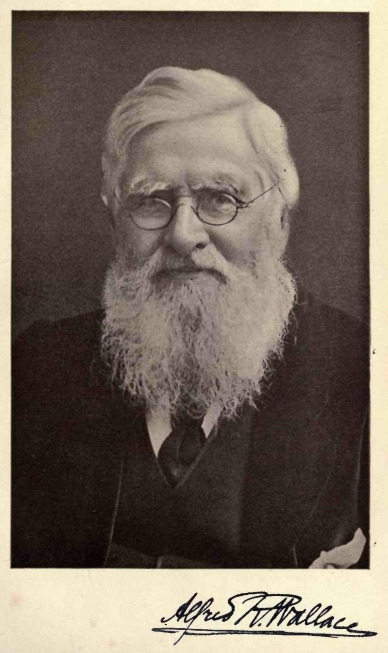
[Article]Mimetic butterflies support Wallace's model of sexual dimorphism


Mimetic butterflies support Wallace's model of sexual dimorphism
Proc Biol Sci. 2008 Jul 22;275(1643):1617-24.
Krushnamegh Kunte


Section of Integrative Biology, University of Texas at Austin, 1 University Station C 0930, Austin, TX 78712-0253, USA Theoretical and empirical observations generally support Darwin's view that sexual dimorphism evolves due to sexual selection on, and deviation in, exaggerated male traits. Wallace presented a radical alternative, which is largely untested, that sexual dimorphism results from naturally selected deviation in protective female coloration. This leads to the prediction that deviation in female rather than male phenotype causes sexual dimorphism. Here I test Wallace's model of sexual dimorphism by tracing the evolutionary history of Batesian mimicry—an example of naturally selected protective coloration—on a molecular phylogeny of Papilio butterflies. I show that sexual dimorphism in Papilio is significantly correlated with both female-limited Batesian mimicry, where females are mimetic and males are non-mimetic, and with the deviation of female wing colour patterns from the ancestral patterns conserved in males. Thus, Wallace's model largely explains sexual dimorphism in Papilio. This finding, along with indirect support from recent studies on birds and lizards, suggests that Wallace's model may be more widely useful in explaining sexual dimorphism. These results also highlight the contribution of naturally selected female traits in driving phenotypic divergence between species, instead of merely facilitating the divergence in male sexual traits as described by Darwin's model.
Keywords

Batesian mimicry, polymorphism, female-limited mimicry, directional selection, stabilizing sexual selection, convergence

2008年6月12日 星期四

[Debate]珊瑚蛇與奶蛇擬態經典案例的諸多疑點


Milk snake與Coral snake所形成的putative mimicry complex成為擬態生物學研究的經典已達一世紀之久. 但是這個擬態群一直存在著兩個違背Batesian mimicry預測的基本問題: (1) 被認為是mimic的奶蛇數量遠比被認為是model的coral snake為多; (2) 兩者不一定(而且經常)是不共棲的. 針對model與mimic不一定共棲的問題, 已經有"allopatric mimicry"這個理論所討論, 對於兩者個相對豐度的問題則應追溯至Brower & Brower (1962)以及Greene & McDiarmid (1981)的文章. Harper & Pfennig (2008)的文章則以族群遺傳學的方法證實了身為mimic的milk snake雄性會進行遷徙, 而且遷徙到coral snake不存在的地區, 間接地提供allopatric mimicry存在的族群遺傳學事證. 然而倒底是什麼記憶力, 學習能力與辯識力好的predator讓allopatric mimicry能夠存在, 則應該是下一個研究的目標.
  • Brattstrom, B.H. 1955. The Coral Snake 'Mimic' Problem and Protective Coloration. Evolution 9(2): 217-219.
  • Dunn, E.R. 1949. Relative Abundance of Some Panamanian Snakes. Ecology 30(1): 39-57.
  • Brower, L. P. & Brower, J. V. Z. 1962. The relative abundance of model and mimic butterflies in natural populations of the Battus philenor mimicry complex. Ecology 43: 154–158.
  • Clarke, C. & Sheppard, P. M. 1975. The genetics of the mimetic butterfly Hypolimnas bolina (L.). Phil. Trans. R. Soc. B 272: 229–265.
  • Greene, H. W. & McDiarmid, R. Y. 1981. Coral snake mimicry: does it occur? Science 213: 1207–1212.
  • Harper, G.R., Pfennig, D.W. 2008. Selection overrides gene flow to break down maladaptive mimicry. Nature 451: 1103-1106.
  • Pfennig, D. W., Harcombe, W. R. & Pfennig, K. S. 2001. Frequency-dependent Batesian mimicry. Nature 410: 323.
  • Ruxton, G. D., Sherratt, T. N. & Speed, M. P. 2004. Avoiding Attack: The Evolutionary Ecology of Crypsis, Warning Signals and Mimicry. Oxford Univ. Press, Oxford.
  • Waldbauer, G. P. & Sternburg, J. G. 1987. Experimental field demonstration that two aposematic butterfly color patterns do not confer protection against birds in Northern Michigan. Am. Midl. Nat. 118: 145–152.
  • Wallace, A. R. 1870. Contributions to the Theory of Natural Selection, Macmillan, London.
其它以奶蛇/珊瑚蛇所形成的擬態群為研究的文章可見David W. Pfennig研究群的著作目錄.

2008年4月30日 星期三

[Article]Conflict btw natural & sexual selection due to mmicry


Interspecific sexual attraction because of convergence in warning colouration: is there a conflict between natural and sexual selection in mimetic species?

Journal of Evolutionary Biology

Volume 21 Issue 3 Page 749-760, May 2008

Citation: C. ESTRADA, C. D. JIGGINS (2008) Interspecific sexual attraction because of convergence in warning colouration: is there a conflict between natural and sexual selection in mimetic species? Journal of Evolutionary Biology 21 (3) , 749–760 doi:10.1111/j.1420-9101.2008.01517.x

Abstract

When species converge in their colour patterns because of mimicry, and those patterns are also used in mate recognition, there is a probability of conflicting selection pressures. Closely related species that mimic one another are particularly likely to face such confusion because of similarities in their courtship behaviour and ecology. We conducted experiments in greenhouse conditions to study interspecific attraction between two mimetic butterfly species, Heliconius erato and Heliconius melpomene. Both species spent considerable time approaching and courting females of the co-mimic species. Experiments using wing models demonstrated the importance of colour pattern in this interspecific attraction. Although males of H. melpomene were attracted to their co-mimics as much as to their own females, H. erato males were more efficient at distinguishing conspecifics, possibly using wing odours. Although preliminary, these results suggest that the use of additional cues may have evolved in H. erato to reduce the cost of convergence in visual signals with H. melpomene. Overall, our results showed that there might be a cost of mimetic convergence because of a reduction in the efficiency of species recognition. Such cost may contribute to explain the apparently stable diversity in Müllerian mimetic patterns in many tropical butterfly assemblages.

2008年3月13日 星期四

[Article]Cognitive Dimensions of Predator Responses to Imperfect Mimicry

Link: http://0rz.tw/633Np
Abstract: Many palatable animals, for example hoverflies, deter predators by mimicking well-defended insects such as wasps. However, for human observers, these flies often seem to be little better than caricatures of wasps—their visual appearance and behaviour are easily distinguishable from those which they are attempting to mimic. This imperfect mimicry baffles evolutionary biologists, because one might expect natural selection to do a more thorough job. Here we discuss two types of cognitive processes that might explain why distinguishable mimics could enjoy increased protection from predation. Speed–accuracy tradeoffs in predator decision making might give imperfect mimics sufficient time to escape, and predators under time constraint might avoid time-consuming discriminations between well-defended models and inaccurate edible mimics and instead adopt a “safety first” policy of avoiding insects with similar appearance. Categorisation of prey types by predators could mean that wholly dissimilar mimics may be protected, provided they share some common property with noxious prey. If predators use experience with multiple prey types to learn rules rather than just memorising the appearance of individual prey types, it follows that different individual predators should form different categories, each including separate types of novel prey. Experimental studies to test these hypotheses should be straightforward, because we can use the relatively simple signals (e.g., striped patterns) with which prey manipulate predator behaviour as tools for investigating cognitive processes that underlie decision making and object recognition in animals' daily lives.