顯示具有 Sexual selection 標籤的文章。 顯示所有文章

2011年8月26日 星期五

為何車前燈蛾的翅紋多樣性可以長期存在?


[image]
Nokelainen O, Hegna RH, Reudler JH, Lindstedt C, Mappes J. 2011. Trade-off between warning signal efficacy and mating success in the wood tiger moth. Proc. R. Soc. B. doi: 10.1098/rspb.2011.0880 [full text]

從演化的觀點來看,特徵選汰應傾向於對物種存活有利的方式,並且,後期這些基因特質應達到穩定且妨礙多態型的存在,但有許多警戒色的例子顯示多態型的物種是可以同時存在於相同族群中,其顯示不同型態之特徵可能具有不同優勢存在,或其可能具有相同功效。在此,作者以具有明顯翅紋變異的白色及黃色車前燈蛾(Parasemia plantaginis)作為獵物,以藍山雀(Parus caeruleus)作為捕食者測試翅紋警戒色在存活率和繁殖成功率之間的關係。結果顯示:(a)捕食者對於黃色翅紋有較長的攻擊延遲時間 (b)黃色翅紋的個體存活率比白色翅紋的個體好 (c)白色翅紋的個體繁殖成功率比黃色翅紋個體好,因此,作者認為此結果正好為車前燈蛾白色及黃色翅紋同時共存於自然界作一個很好的解釋。

2008年8月5日 星期二

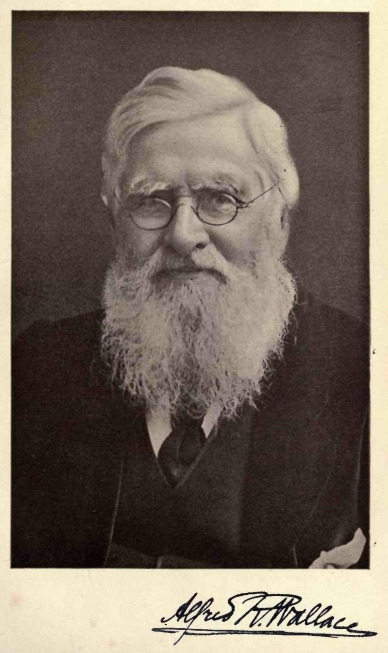
[Article]Mimetic butterflies support Wallace's model of sexual dimorphism


Mimetic butterflies support Wallace's model of sexual dimorphism
Proc Biol Sci. 2008 Jul 22;275(1643):1617-24.
Krushnamegh Kunte


Section of Integrative Biology, University of Texas at Austin, 1 University Station C 0930, Austin, TX 78712-0253, USA Theoretical and empirical observations generally support Darwin's view that sexual dimorphism evolves due to sexual selection on, and deviation in, exaggerated male traits. Wallace presented a radical alternative, which is largely untested, that sexual dimorphism results from naturally selected deviation in protective female coloration. This leads to the prediction that deviation in female rather than male phenotype causes sexual dimorphism. Here I test Wallace's model of sexual dimorphism by tracing the evolutionary history of Batesian mimicry—an example of naturally selected protective coloration—on a molecular phylogeny of Papilio butterflies. I show that sexual dimorphism in Papilio is significantly correlated with both female-limited Batesian mimicry, where females are mimetic and males are non-mimetic, and with the deviation of female wing colour patterns from the ancestral patterns conserved in males. Thus, Wallace's model largely explains sexual dimorphism in Papilio. This finding, along with indirect support from recent studies on birds and lizards, suggests that Wallace's model may be more widely useful in explaining sexual dimorphism. These results also highlight the contribution of naturally selected female traits in driving phenotypic divergence between species, instead of merely facilitating the divergence in male sexual traits as described by Darwin's model.
Keywords

Batesian mimicry, polymorphism, female-limited mimicry, directional selection, stabilizing sexual selection, convergence

2008年4月30日 星期三

[Article]Conflict btw natural & sexual selection due to mmicry


Interspecific sexual attraction because of convergence in warning colouration: is there a conflict between natural and sexual selection in mimetic species?

Journal of Evolutionary Biology

Volume 21 Issue 3 Page 749-760, May 2008

Citation: C. ESTRADA, C. D. JIGGINS (2008) Interspecific sexual attraction because of convergence in warning colouration: is there a conflict between natural and sexual selection in mimetic species? Journal of Evolutionary Biology 21 (3) , 749–760 doi:10.1111/j.1420-9101.2008.01517.x

Abstract

When species converge in their colour patterns because of mimicry, and those patterns are also used in mate recognition, there is a probability of conflicting selection pressures. Closely related species that mimic one another are particularly likely to face such confusion because of similarities in their courtship behaviour and ecology. We conducted experiments in greenhouse conditions to study interspecific attraction between two mimetic butterfly species, Heliconius erato and Heliconius melpomene. Both species spent considerable time approaching and courting females of the co-mimic species. Experiments using wing models demonstrated the importance of colour pattern in this interspecific attraction. Although males of H. melpomene were attracted to their co-mimics as much as to their own females, H. erato males were more efficient at distinguishing conspecifics, possibly using wing odours. Although preliminary, these results suggest that the use of additional cues may have evolved in H. erato to reduce the cost of convergence in visual signals with H. melpomene. Overall, our results showed that there might be a cost of mimetic convergence because of a reduction in the efficiency of species recognition. Such cost may contribute to explain the apparently stable diversity in Müllerian mimetic patterns in many tropical butterfly assemblages.