2008年10月18日 星期六

[Artical]Can't tell the caterpillars from the trees: countershading enhances survival in a woodland

Can't tell the caterpillars from the trees: countershading enhances survival in a woodland

Hannah M. Rowland1, Innes C. Cuthill2, Ian F. Harvey1, Michael P. Speed1, Graeme D. Ruxton3

1 School of Biological Sciences, University of Liverpool, Biosciences Building, Crown Street, Liverpool L69 7ZB, UK
2 School of Biological Sciences, University of Bristol, Woodland Road, Bristol BS8 1UG, UK
3Division of Environmental and Evolutionary Biology, Institute of Biomedical and Life Sciences, University of Glasgow, Graham Kerr Building, Glasgow G12 8QQ, UK

Perception of the body's outline and three-dimensional shape arises from visual cues such as shading, contour, perspective and texture. When a uniformly coloured prey animal is illuminated from above by sunlight, a shadow may be cast on the body, generating a brightness contrast between the dorsal and ventral surfaces. For animals such as caterpillars, which live among flat leaves, a difference in reflectance over the body surface may degrade the degree of background matching and provide cues to shape from shading. This may make otherwise cryptic prey more conspicuous to visually hunting predators. Cryptically coloured prey are expected to match their substrate in colour, pattern and texture (though disruptive patterning is an exception), but they may also abolish self-shadowing and therefore either reduce shape cues or maintain their degree of background matching through countershading: a gradation of pigment on the body of an animal so that the surface closest to illumination is darker. In this study, we report the results from a series of field experiments where artificial prey resembling lepidopteran larvae were presented on the upper surfaces of beech tree branches so that they could be viewed by free-living birds. We demonstrate that countershading is superior to uniform coloration in terms of reducing attack by free-living predators. This result persisted even when we fixed prey to the underside of branches, simulating the resting position of many tree-living caterpillars. Our experiments provide the first demonstration, in an ecologically valid visual context, that shadowing on bodies (such as lepidopteran larvae) provides cues that visually hunting predators use to detect potential prey species, and that countershading counterbalances shadowing to enhance cryptic protection.

keywords: countershading, crypsis, predation, animal coloration, defensive coloration


2008年10月17日 星期五

[Article]Learning and the mimicry spectrum: from quasi-Bates to super-Müller

Alexandra C.V. BaloghCorresponding Author Contact Information, a, E-mail The Corresponding Author, Gabriella Gamberale-Stillea and Olof Leimara

aDepartment of Zoology, Stockholm University, Sweden

Müllerian mimicry is the mutualistic resemblance between two defended species, while Batesian mimicry is the parasitic resemblance between a palatable species (the mimic) and an unpalatable one (the model). These two kinds of mimicry are traditionally seen as extreme ends of a mimicry spectrum. For the range in between, it has been suggested that mimetic relations between unequally defended species could be parasitic, and this phenomenon has been referred to as quasi-Batesian mimicry. Where a mimetic relation is placed along the mimicry spectrum depends on the assumptions made about predator learning. We used a variant of the Rescorla–Wagner learning model for virtual predators to analyse the different possible components of the mimicry spectrum. Our model entails that the rate of associative learning is influenced by variation in the stimuli to be learned. Variable stimuli, that is, unequal defences, can increase the predator learning rate and thus lead to an increased level of mutualism in a mimetic relation. In our analysis, we made use of the concepts of super-Müllerian mimicry, where the benefit of mimicry is even greater than in traditional Müllerian mimicry, and quasi-Müllerian mimicry, where mimicry by a palatable mimic is mutualistic. We suggest that these types of mimicry should be included in the mimicry spectrum along with Müllerian, Batesian and quasi-Batesian mimicry.

Keywords: associative learning; mutualism; Müllerian mimicry; quasi-Batesian mimicry; Rescorla–Wagner model

2008年9月29日 星期一

[Article]Multimodal warning signals for a multiple predator world

Nature 455, 96-99 (4 September 2008) | doi:10.1038/nature07087; Received 10 February 2008; Accepted 14 May 2008

Multimodal warning signals for a multiple predator world

John M. Ratcliffe1,3 & Marie L. Nydam2,3

  1. Center for Sound Communication, Institute of Biology, University of Southern Denmark, DK-5230 Odense M, Denmark
  2. Department of Ecology and Evolutionary Biology, Cornell University, Ithaca, New York 14853, USA
  3. These authors contributed equally to this work.

Correspondence to: John M. Ratcliffe1,3Marie L. Nydam2,3 Correspondence and requests for materials should be addressed to M.L.N. (Email: mln32@cornell.edu) or J.M.R. (Email: jmr@biology.sdu.dk).

Top

Aposematism is an anti-predator defence, dependent on a predator's ability to associate unprofitable prey with a prey-borne signal1. Multimodal signals should vary in efficacy according to the sensory systems of different predators; however, until now, the impact of multiple predator classes on the evolution of these signals had not been investigated2, 3. Here, using a community-level molecular phylogeny to generate phylogenetically independent contrasts, we show that warning signals of tiger moths vary according to the seasonal and daily activity patterns of birds and bats—predators with divergent sensory capacities. Many tiger moths advertise chemical defence4, 5 using conspicuous colouration and/or ultrasonic clicks3, 6. During spring, when birds are active and bats less so, we found that tiger moths did not produce ultrasonic clicks. Throughout both spring and summer, tiger moths most active during the day were visually conspicuous. Those species emerging later in the season produced ultrasonic clicks; those that were most nocturnal were visually cryptic. Our results indicate that selective pressures from multiple predator classes have distinct roles in the evolution of multimodal warning displays now effective against a single predator class. We also suggest that the evolution of acoustic warning signals may lack the theoretical difficulties associated with the origination of conspicuous colouration.

2008年8月5日 星期二

[Article]Mimetic butterflies support Wallace's model of sexual dimorphism


Mimetic butterflies support Wallace's model of sexual dimorphism
Proc Biol Sci. 2008 Jul 22;275(1643):1617-24.
Krushnamegh Kunte


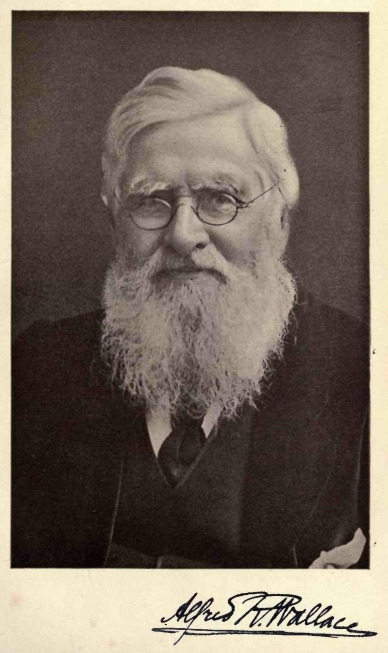
Section of Integrative Biology, University of Texas at Austin, 1 University Station C 0930, Austin, TX 78712-0253, USA Theoretical and empirical observations generally support Darwin's view that sexual dimorphism evolves due to sexual selection on, and deviation in, exaggerated male traits. Wallace presented a radical alternative, which is largely untested, that sexual dimorphism results from naturally selected deviation in protective female coloration. This leads to the prediction that deviation in female rather than male phenotype causes sexual dimorphism. Here I test Wallace's model of sexual dimorphism by tracing the evolutionary history of Batesian mimicry—an example of naturally selected protective coloration—on a molecular phylogeny of Papilio butterflies. I show that sexual dimorphism in Papilio is significantly correlated with both female-limited Batesian mimicry, where females are mimetic and males are non-mimetic, and with the deviation of female wing colour patterns from the ancestral patterns conserved in males. Thus, Wallace's model largely explains sexual dimorphism in Papilio. This finding, along with indirect support from recent studies on birds and lizards, suggests that Wallace's model may be more widely useful in explaining sexual dimorphism. These results also highlight the contribution of naturally selected female traits in driving phenotypic divergence between species, instead of merely facilitating the divergence in male sexual traits as described by Darwin's model.
Keywords

Batesian mimicry, polymorphism, female-limited mimicry, directional selection, stabilizing sexual selection, convergence

2008年8月3日 星期日

[Article]The role of eyespots as anti-predator mechanisms, principally demonstrated in the Lepidoptera

Review Article


The role of eyespots as anti-predator mechanisms, principally demonstrated in the Lepidoptera


Martin Stevens a1
a1 Ecology of Vision, School of Biological Sciences, University of Bristol, Woodland Road, Bristol, BS8 1UG. UK (E-mail: Martin.Stevens@bristol.ac.uk)

Abstract

Eyespots are found in a variety of animals, in particular lepidopterans. The role of eyespots as antipredator mechanisms has been discussed since the 19th Century, with two main hypotheses invoked to explain their occurrence. The first is that large, centrally located eyespots intimidate predators by resembling the eyes of the predators' own enemies; the second, though not necessarily conflicting, hypothesis is that small, peripherally located eyespots function as markers to deflect the attacks of predators to non-vital regions of the body. A third possibility is also proposed; that eyespots intimidate predators merely because they are novel or rarely encountered salient features. These hypotheses are reviewed, with special reference given to avian predators, since these are likely to be the principal visually hunting predators of the lepidopterans considered. Also highlighted is the necessity to consider the potential influence of sexual selection on lepidopteran wing patterns, and the genetics and development of eyespot formation.

2008年6月12日 星期四

[Debate]珊瑚蛇與奶蛇擬態經典案例的諸多疑點


Milk snake與Coral snake所形成的putative mimicry complex成為擬態生物學研究的經典已達一世紀之久. 但是這個擬態群一直存在著兩個違背Batesian mimicry預測的基本問題: (1) 被認為是mimic的奶蛇數量遠比被認為是model的coral snake為多; (2) 兩者不一定(而且經常)是不共棲的. 針對model與mimic不一定共棲的問題, 已經有"allopatric mimicry"這個理論所討論, 對於兩者個相對豐度的問題則應追溯至Brower & Brower (1962)以及Greene & McDiarmid (1981)的文章. Harper & Pfennig (2008)的文章則以族群遺傳學的方法證實了身為mimic的milk snake雄性會進行遷徙, 而且遷徙到coral snake不存在的地區, 間接地提供allopatric mimicry存在的族群遺傳學事證. 然而倒底是什麼記憶力, 學習能力與辯識力好的predator讓allopatric mimicry能夠存在, 則應該是下一個研究的目標.
  • Brattstrom, B.H. 1955. The Coral Snake 'Mimic' Problem and Protective Coloration. Evolution 9(2): 217-219.
  • Dunn, E.R. 1949. Relative Abundance of Some Panamanian Snakes. Ecology 30(1): 39-57.
  • Brower, L. P. & Brower, J. V. Z. 1962. The relative abundance of model and mimic butterflies in natural populations of the Battus philenor mimicry complex. Ecology 43: 154–158.
  • Clarke, C. & Sheppard, P. M. 1975. The genetics of the mimetic butterfly Hypolimnas bolina (L.). Phil. Trans. R. Soc. B 272: 229–265.
  • Greene, H. W. & McDiarmid, R. Y. 1981. Coral snake mimicry: does it occur? Science 213: 1207–1212.
  • Harper, G.R., Pfennig, D.W. 2008. Selection overrides gene flow to break down maladaptive mimicry. Nature 451: 1103-1106.
  • Pfennig, D. W., Harcombe, W. R. & Pfennig, K. S. 2001. Frequency-dependent Batesian mimicry. Nature 410: 323.
  • Ruxton, G. D., Sherratt, T. N. & Speed, M. P. 2004. Avoiding Attack: The Evolutionary Ecology of Crypsis, Warning Signals and Mimicry. Oxford Univ. Press, Oxford.
  • Waldbauer, G. P. & Sternburg, J. G. 1987. Experimental field demonstration that two aposematic butterfly color patterns do not confer protection against birds in Northern Michigan. Am. Midl. Nat. 118: 145–152.
  • Wallace, A. R. 1870. Contributions to the Theory of Natural Selection, Macmillan, London.
其它以奶蛇/珊瑚蛇所形成的擬態群為研究的文章可見David W. Pfennig研究群的著作目錄.

2008年6月7日 星期六

[Practice]變色龍適合拿來當成predator嗎?

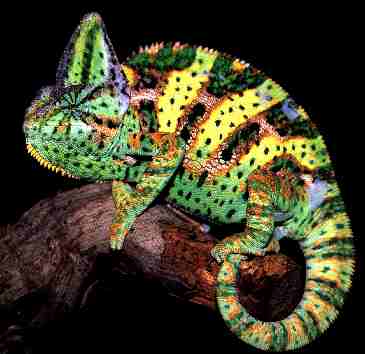
今天以台灣茶斑蛾(Eterusia taiwana)當成prey, 丟給高冠變色龍, 日守宮和攀蜥試試, 原本的想像是--高冠會因為吃到可怕的東西而生氣變色, 這樣我們就知道高冠是否覺得那個東西unpalatable, 這樣不是很棒嗎? 結果丟了斑蛾給四隻高冠, 四隻看了兩眼, 連試也不試, 就走了, 是因為不餓嗎? NO! 丟蟋蟀下去馬上就被吃掉了, 因此那四隻高冠並不是因為不餓才不吃的啊. 接下來再試一次, 仍然只觀察, 但完全不予理會. 所以使用高冠變色龍做為predation test中的naive predator的夢想破碎.

接下來使用的是日守宮. 日守宮看見斑蛾後會馬上下來咬, 但咬完就放開. 看起來是好的開始. 接下來使用攀蜥也有一樣的效果. 但是馬上再拿
給同一隻日守宮再試一次, 牠又咬了一次, 然後又放開沒吃. 這代表什麼呢? 表示這個stimulus的強度不足? 不足以讓日守宮產生警戒? 還是第一次的取食失敗並沒有伴隨明顯的視覺警訊 (那隻斑蛾是羽化失敗的 大多數翅紋沒有顯示)? 或者是日守宮的記憶力不好? 之後我們又試了瑤山鱷蜥, 一樣是咬了後馬上吐出來. 因此日行性的斑蛾對日行性的蜥蜴是unpalatable是確認的. 然而這些蜥蜴是否能夠成為predator test裏的naive predator則需要更多的測試.